

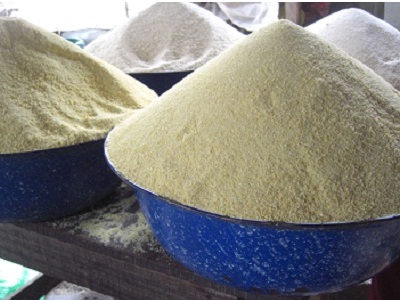
Garri is a popular West African food made from cassava tubers. It has a long history and holds significant cultural importance in many African communities.
Historically, garri has been a staple food in Nigeria, Ghana, and other West African countries for centuries. It is believed the process of making garri was developed by the Yoruba people of Nigeria. Cassava, the main ingredient in garri, was introduced to Africa from South America by Portuguese traders in the 16th century and quickly became a crucial crop due to its ability to thrive in tropical climates
Culturally, garri is often associated with resilience and resourcefulness. It is considered a food of the masses, providing sustenance for many during times of scarcity. It is also known for its versatility, as it can be consumed in various forms such as soaked in water to make eba, cooked into a paste for fufu, or eaten as a snack when fried as garri chips.
Garri holds a special place in ceremonies and celebrations in many West African communities. It is often served at weddings, funerals, and other special occasions, symbolizing hospitality and community. In some traditions, garri is also used in rituals and offerings to ancestors and spirits.
It is rich in carbohydrates and low in fat. It contains essential vitamins like Vitamin C and B vitamins, as well as minerals such as calcium, phosphorus, potassium, and magnesium. Garri is also a good source of fiber, which can aid in digestion and help maintain a healthy weight. However, it is important to note that garri is high in calories, so it should be consumed in moderation as part of a balanced diet.
Before this garri can be ready for consumption, it passes through various stages and the process involves ;
STEP 1: Firstly, you start by uprooting the main ingredient which is the cassava. After harvesting your cassava, you peel them, and wash thoroughly to make it clean.
STEP 2: After harvesting and washing, the next process is grating, and this grating cannot be done by any machine, there is a special machine for doing that.
STEP 3: After grating, you package the result in a clean sack for fermentation.
STEP 4: After fermentation, you take it to the jack for drying.
STEP 5: After drying, you sieve your grated cassava
STEP 6: Finally, after sieving, you fry and your garri is ready for consumption.
One of the reasons garri is so beloved is its long shelf life, making it a practical option for households looking for a reliable food source. It is also a cost-effective option that can be enjoyed by people of all ages. Additionally, garri can be paired with a variety of dishes, such as soups, stews, or beans, making it a versatile ingredient that can be incorporated into different meals.
